Alison Ronson

Alison (she/her) joined the Weston Family Foundation in 2022 and oversees all programming related to Northern Science and Knowledge. Prior to joining the Foundation, Alison worked as the National Director of Operations and Legal Counsel with the Canadian Parks and Wilderness Society (CPAWS), where she was responsible for instituting operational systems and processes in the CPAWS national office. Alison has an extensive work history in large landscape-scale science and conservation, fundraising, financial planning, and reporting within charitable/non-profit organizations.  

Alison has a degree of Barrister-at-Law, Law Society of Ontario, a Masters in International Affairs from Carleton University, where she focused on the impact of climate change on Arctic environmental institutions, and a Bachelor of Science with Honours from Queens University (Faculty of Biology and Faculty of Environmental Sciences), where she studied the impact of climate change on Arctic soil microbial processes.

Weston Family Soil Health Initiative

Program Overview

Loss of biodiversity on agricultural lands is occurring at an unprecedented rate due to agricultural intensification and habitat loss. Research shows that Canada’s agricultural lands offer an immediate and large-scale opportunity to mitigate further biodiversity losses, and by promoting and increasing soil organic matter, we can help support more adaptive and resilient agricultural lands.

Goal: The initiative seeks to expand the adoption of ecologically-based beneficial management practices (BMPs) that increase soil organic matter in order to improve biodiversity and resiliency on agricultural lands across Canada. The LOIs will allow the Foundation to understand the opportunities and comprehensive project ideas that currently exist, in order to build an informed framework for the proposal phase.

The initiative’s goal will be supported by the Foundation’s longer-term strategy which is comprised of catalyzing and shepherding ‘winning approaches’, to ultimately scaling projects with the greatest opportunities for impact. Successful applicants who meet the defined selection criteria within the LOI will be invited to submit full proposals.

Strategy: The initiative aims to increase the number of agricultural producers using BMPs that are scientifically proven to help increase soil organic matter on farmland. Through multi-year investments, the initiative aims to promote a behavioural shift towards the wider acceptance and adoption of the following BMPs:

  • Cover Cropping;
  • Nutrient Management (4R Principles); and
  • Crop Diversification/ Rotation.

Project Eligibility: Our strategy is designed to test which of the following approaches maximize the adoption rate of the desired BMPs in an efficient and scalable manner. Eligible approaches include:

  1. Incentivizing Stewardship: Projects which incentivize producers to adopt one or more of the identified BMPs (e.g. reverse auctions, community-based models).
  2. Outreach/Education and Training: Projects which increase access to, share technical knowledge of, and train producers on the identified BMPs.
  3. Sustainability Certification/Standard: A project which aims to establish a sustainable farmland management certification/standard at scale.

Funding: The timeframe for this ‘spark phase’ will run 3-5 years in length with a total funding envelope of $10M.

Project Roundup: The Great Lakes Challenge

When our Foundation connected with non-profit organization Swim Drink Fish in 2017 to launch the Great Lakes Challenge, we did so to champion projects with several key goals in mind.

As part of a larger commitment to protect freshwater that included a separate Nature Conservancy of Canada initiative on Lakes Superior and Erie, we wanted the Challenge projects to focus on conservation of Great Lakes waters, wetlands, and key tributaries. We wanted to invest in efforts that would make major, sustainable impacts over the long term but start delivering results in the short term, alleviating threats such as polluted water and loss of habitat for species at risk. We wanted to create tangible outcomes that the citizens of the Great Lakes could recognize, experience and enjoy — building on the idea that people who are connected to the water are more likely to protect it.

Thanks to the dedication, drive and vision of many, these goals have been achieved.

Click here for the full story.

Canadian Prescribed Fire Training Program

Launched in 2026, the Canadian Prescribed Fire Training Program (CPFTP) is an $8 million national initiative designed to strengthen Canada’s capacity for the safe and responsible use of prescribed fire.


This program builds on the success achieved through the Weston Family Prairie Grasslands Initiative, which identified fire suppression as a key factor contributing toward the loss of biodiversity in Canada’s Prairie ecosystems. Through collaboration with Meewasin Valley Authority, the Foundation facilitated the design, development, and launch of the Canadian Prairie Prescribed Fire Exchange (CPPFE), Canada’s first prescribed fire collaborative working to support the use of prescribed fire in land management throughout the Prairies. The CPPFE delivered a proof-of-concept model and highlighted an immediate and critical opportunity to expand the use of prescribed fire across Canada’s diverse and varied landscapes.


The Canadian Prescribed Fire Training Program will expand and scale prescribed fire training nationwide, to increase capacity for the safe, effective, and informed use of fire in land management.


The program focuses on:

  • Expanding training and mentorship opportunities for practitioners
  • Strengthening evidence-informed practice
  • Supporting Indigenous-led fire stewardship and cultural fire
  • Increasing capacity to enhance biodiversity, ecosystem resilience, and community safety

By advancing training and coordination at a national scale, the program aims to normalize the responsible use of prescribed fire as an essential land management tool across Canada’s fire-dependent landscapes.


For more information, please refer to the link: Home | Canadian Prescribed Fire Training Program

Applications now being accepted for the 2022 Weston Family Awards in Northern Research

The Weston Family Foundation is pleased to announce the launch of the 2022 Weston Family Awards in Northern Research. Through a competitive process, these awards are presented annually to outstanding students and scientists in northern research from across Canada.

As of Nov. 4, 2021, the Weston Family Awards are open to students pursuing master’s or doctoral degrees, or a postdoctoral fellowship. Past winners have undertaken research projects across a broad spectrum of fields and disciplines in the natural sciences, including studies of northern ecosystems, biodiversity, flora and fauna, meteorology, oceanography, glaciology, geography and environmental studies.

Since the program’s inception in 2007, more than 300 early-career researchers have been selected to receive an award, forming a community of Weston Family Northern Scientists who are at the forefront of northern scholarship and who are helping shape a better future for Canada and the world. In the most recent round of awards, 27 researchers were chosen for a variety of research projects, including bird biodiversity, polar bear ecology, permafrost thaw, beluga health and Inuit knowledge.

The deadline to submit an application for the current awards program is Jan. 27, 2022, at 5:00 p.m. (EST). For more information, please visit www.westonfamilyawards.ca.

Congratulations to the winners of the Weston Family Awards in Northern Research

The Weston Family Awards in Northern Research were launched in 2007 to support early-career researchers focusing on science in the North. Since that time, nearly 300 scientists have been funded at the graduate and postdoctoral level.

Through a competitive process, awards are presented to outstanding students and scientists in northern research from universities across Canada. This year, 27 researchers were chosen for a variety of research projects, including bird biodiversity, polar bear ecology, permafrost thaw, beluga health and Inuit knowledge.

Read more about the work of this year’s award winners here: 2021 Weston Family Awards in Northern Research

Earth Rangers

Since 2011, the Weston Family Foundation has supported Earth Rangers’ mission to foster environmental education and to encourage every child to take action towards the conservation of northern Canada north.

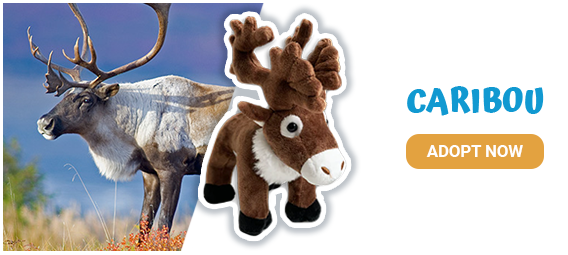
Earth Rangers’ national Wildlife Adoptions Program helps to educate children and empower them to improve the environment and protect animals. Foundation support has enabled more than one million children and their families to learn about iconic northern species such as caribou, polar bear, and beluga whale, bringing a deeper understanding of northern wildlife to new audiences. As a result, Earth Rangers has been successful in engaging families across the country to support biodiversity and conservation in Canada’s North.

For more information, visit the Earth Rangers website: www.earthrangers.com

Wildlife Conservation Society Canada

Encouraging meaningful and informative collaborations is at the core of the Foundation’s work to enhance scientific research and shape dialogue about Canada’s North. The Foundation supports organizations that build new alliances and forge significant relationships between environmental organizations, decision makers and other key stakeholders.

Across the Northern Boreal forests and the western Arctic, Wildlife Conservation Society Canada (WCS Canada) is supported by the Foundation to ensure that scientific data is available to guide decisions for the protection of species and ecosystems through meaningful collaborations.

WCS Canada also administers the Weston Family Boreal Research Fellowships, which allow the next generation of northern researchers to work alongside leading scientists, thereby enhancing their graduate-level work and informing new conversations. The annual fellowships are awarded to support field research relevant to WCS Canada’s conservation objectives at their two long-term conservation sites: the boreal region of Northern Ontario and the Northern Boreal Mountains of Yukon and British Columbia.

For more information on the Fellowships, please visit the WCS Canada Fellowships page

For details on the accomplishments of the program, please review the 2009-2019 WCS Canada Fellowship Program Report

Canadian City Parks Report

Three years ago, our Foundation supported Park People to fill an information gap by gathering, analyzing and sharing data and stories about Canada’s city parks system. Since that time, the annual Canadian City Parks Report has become an invaluable tool for municipal staff and volunteers to highlight challenges, share best practices, and adapt to the changing needs of city parks across the country.

The 2021 Canadian City Parks Report was launched in early July featuring information from 32 cities across Canada. It also includes the results of a survey with nearly 3,500 participants who shared what parks have meant to them during the pandemic.

To read the 2021 Canadian City Parks Report, please visit parkpeople.ca

The Meadoway

In 2013, our Foundation worked with Park People to launch the Weston Family Parks Challenge—a $5M initiative to encourage innovative and sustainable city parks projects. Twenty-six projects were supported, including the successful Scarborough Butterfly Trail, an innovative trail and meadow restoration project in the Gatineau Hydro Corridor.

In April 2018, our Foundation, the Toronto and Region Conservation Authority (TRCA), and the City of Toronto jointly announced a ground-breaking city-building initiative to transform 16 kilometres of underutilized land into one of Canada’s largest urban linear parks. Expanding on the Scarborough Butterfly Trail, The Meadoway will restore biodiversity, connect Canadians to nature, and act as a pilot for restoration projects across the country.

Stretching from the Don River Ravine in downtown Toronto to Rouge National Urban Park, The Meadoway will become a vibrant expanse of urban greenspace and meadowlands as it develops over the next three years. It will connect four ravines, 15 parks, 34 neighbourhoods, over 500 acres and more than 1,000 diverse species of flora and fauna. The Meadoway will connect schools, businesses, hospitals, and underused parks and trails across Scarborough for the benefit of locals and visitors alike.

Our Foundation has pledged up to $25 million to help Toronto realize The Meadoway. Read more about its progress at themeadoway.ca.